
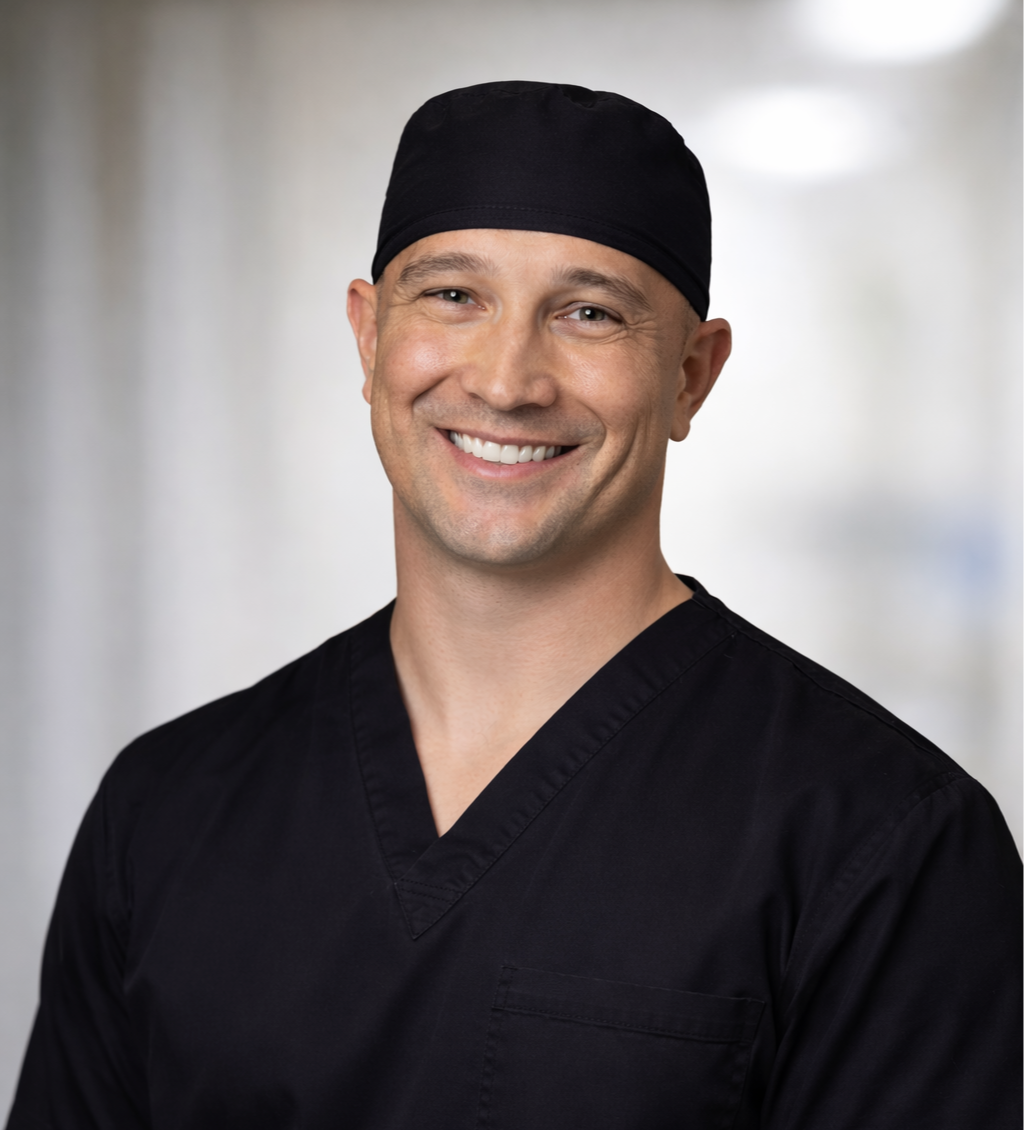
Geoffrey W. Krampitz, MD, PhD, FACS, FSSO
Pancreatic Cancer Surgeon and Robotic Surgical Oncologist Specializing in Hepatopancreatobiliary and Gastrointestinal Cancers
About Dr. Geoffrey W. Krampitz
Dr. Geoffrey W. Krampitz is a fellowship-trained pancreatic cancer surgeon and hepatopancreatobiliary (HPB) surgical oncologist serving patients throughout Sacramento, Roseville, and Northern California. His clinical practice at Sutter Medical Center, Sacramento and Sutter Roseville Medical Center focuses on the surgical management of pancreatic, liver, biliary, and other complex gastrointestinal cancers, with particular expertise in advanced minimally invasive and robotic surgical techniques.
Dr. Krampitz serves as Program Medical Director for HPB and Complex GI Surgical Oncology with Sutter Medical Group. He leads a regional program providing specialized cancer surgery at Sutter Medical Center, Sacramento and Sutter Roseville Medical Center. In this role, he works with multidisciplinary teams across both campuses to develop coordinated pancreatic, liver, biliary, and complex gastrointestinal cancer care and advance the thoughtful application of robotic surgical oncology.
Early Life and the Path to Medicine
My path to medicine was shaped by resilience, mentorship, and the belief that opportunity can change the course of a life.
I was born in San José, Costa Rica. Shortly before my eighth birthday, my parents were murdered. I came to the United States soon after and grew up first in a children’s home and later with relatives in Texas. Those early years were defined by uncertainty, but also by extraordinary individuals who offered structure, guidance, and belief at a time when I needed it most.
Their willingness to invest in a child navigating loss left a lasting imprint. It taught me that when someone extends stability and confidence to another person, transformation becomes possible.
That belief continues to shape how I care for patients and families facing pancreatic, liver, and complex gastrointestinal cancers. Serious illness brings vulnerability. My responsibility is not only to operate with technical precision, but to provide steadiness, clarity, and partnership during moments that feel uncertain.
Scientific and Academic Foundation in Surgical Oncology
My medical journey began with engineering.
I earned my undergraduate degree in biomedical engineering from Johns Hopkins University, where I developed a disciplined respect for precision, systems thinking, and evidence-based reasoning. Engineering taught me to approach complex problems methodically — a mindset that translates directly to technically demanding hepatopancreatobiliary and gastrointestinal cancer operations.
I then completed my MD and PhD at Stanford University School of Medicine, conducting doctoral research in stem cell biology and regenerative medicine. My work focused on tumor-initiating cells and the mechanisms that drive cancer growth and recurrence. This research resulted in publications in Science, Science Translational Medicine, PNAS, Annals of Surgery, and Surgery.
That period reinforced a principle that continues to guide my clinical practice:
Exceptional surgical oncology must be grounded in tumor biology.
I completed general surgery residency at Stanford, followed by fellowship training in Complex General Surgical Oncology at MD Anderson Cancer Center, where I refined advanced techniques in pancreatic, liver, bile duct, gastric, esophageal, and colorectal cancer surgery within a rigorous multidisciplinary oncology environment.
My academic work continues to shape how I approach tumor biology, surgical planning, and multidisciplinary care. Additional details are available in the Research section.
Bringing Academic Rigor to Community-Based Cancer Care
After fellowship, I served on faculty at Thomas Jefferson University, participating in patient care, translational research, and surgical education. I later joined Sharp HealthCare, where I helped expand advanced minimally invasive and robotic oncologic surgery programs.
Today, my focus is deliberate and defined. Patients facing complex cancers already carry an enormous burden. They should not also have to travel far from home to receive disciplined, academically grounded surgical oncology.
My goal is to deliver that level of care locally — integrating the standards of leading academic centers with the continuity and personal connection of community medicine.
These principles are applied across the full spectrum of hepatopancreatobiliary and complex gastrointestinal cancers, described in more detail throughout the Conditions section.
Philosophy of Care in Surgical Oncology
Academic rigor, disciplined surgical judgment, and compassionate partnership define my approach to cancer care.
Compassion
A cancer diagnosis affects far more than anatomy. It impacts identity, family, and future plans. I prioritize unhurried consultation, clear communication, and shared decision-making.
Excellence
Surgical quality is a decisive determinant of oncologic outcomes. Careful planning, meticulous technique, and multidisciplinary coordination remain central to every operation.
Innovation
Advances in cancer care come from the thoughtful integration of research, technology, and clinical experience. When appropriate, I incorporate minimally invasive and robotic techniques to enhance visualization and support recovery — without compromising oncologic fundamentals.
What Patients Can Expect
Patients who seek care can expect:
A thorough, focused consultation centered on understanding diagnosis and goals
Clear discussion of treatment options, including surgical and non-surgical approaches
Thoughtful selection of minimally invasive techniques when appropriate
Close coordination with medical oncology, radiation oncology, radiology, and pathology
Care delivered with honesty, empathy, and respect
If you are seeking a consultation or second opinion—whether from Sacramento, Roseville, elsewhere in Northern California, or traveling from the San Francisco Bay Area—I welcome the opportunity to review your case and discuss a careful, evidence-based path forward.
You may learn more about surgical oncology care in Sacramento, Roseville, and Northern California or contact our office to begin the consultation process.